I love Lindy hop and I love the Lindy hop community.
Both have brought me so much joy since I first discovered this amazing dance a few years ago, but I have become increasingly saddened by some of the comments I read online and occasionally hear.
Every so often someone shares a video or something else that brought joy to them and they want to share it with everyone else. Or maybe they just bought their first vintage outfit and tonight is its social debut. Perhaps they asked someone else after class “…who is Frankie Manning?” Or maybe they requested that the DJ play Elvis or Sinatra.
If someone is not yet versed in all of the intricacies of Lindy hop or swing dancing history, or Swing Era music, or the fashion trends of the 1920s-50s, it is possible that they may overlook a detail or two. One of the benefits of a community is that is offers the opportunity to educate and to be educated - I have learnt a lot from reading things written or shared by others better versed than I am, and by listening to more experienced dancers share a little about the history of the dance I love.
But there is a way to inform and share opinions that does not involve scoffing, being patronising or just being rude. A current McDonald’s advert illustrates this perfectly.
I came to Lindy hop through listening to Buddy Holly, Frank Sinatra and electroswing; by watching the dancing in Grease; and, though not directly related, by thinking I should have been a greaser. I know now that none of those things shares much (if anything) with the Swing Era or the birth of Lindy hop, but that is the path I took and I imagine there may be others who were not born into Count Basie, Frankie Manning and swing outs.
I know that I am going in hard on the Lindy hop community, here. I have commented before that self-styled ‘purists’ exist in all dances and walks of life, but sadly the greater something's provenance the louder the snobs. Within Lindy hop I am very grateful that the people I am aiming this post at are very much in the minority. But as they are often some of the more experienced and vocal within our community, they stand to do it the biggest damage due to the status they are afforded.
Frankie stated that he and his fellow Lindy hop pioneers were subjected to dismissive and pejorative statements from event organisers, agents, and other dancers who all viewed Lindy hop with utter disdain throughout its early years. Frankie’s goal was to elevate Lindy hop into the global dance pantheon alongside ballroom and ballet, and he and others had to fight against all forms of discrimination to achieve that.
Furthermore, and based upon the hard work of Frankie and others, the Lindy hop community has developed a reputation for its inclusivity and progressive stance on a number of important (social) issues. So, to hear or read sanctimonious comments from within our community mocking the authenticity in someone’s outfit or music choices, the accuracy of their terminology or historical knowledge, or even just their dancing aesthetic – especially if that someone is at a much earlier stage of their Lindy hop adventure – saddens and sometimes enrages me.
It is antithetical to inclusivity.
I understand that in order for Lindy hop to be recognisably preserved then a curriculum of sorts must extend beyond teaching footwork and technique. There is much to learn about swing dancing, the Swing Era, and the many figures who feature prominently, and much of it is objective, historical fact that is not subject to differences of opinion.
Everyone could do with learning a little more, and some more than others. But, as with all learning, I have always found that positive feedback keeps me hungrier than negative feedback. I know that my students agree, and I am fairly certain that others would too.
Nearly everyone I have met in the Lindy hop community has been kind, warm, and overflowing with a passion for their dance and for those who share it with them. Do not be the exception.
The aim of the Frankie Manning Foundation is to fulfil Frankie's dream of spreading the joy of Lindy hop around the globe.
The tireless passion of the FMF to realise this dream is occasionally underappreciated (and I hope to soon write an article specifically about them!) but one of the key ways in which the FMF have ensured that their labours bear fruit is by awarding scholarships to dancers from across the world.
These dancers are not only people who the FMF believe share Frankie's vision but they are also dancers who represent communities the FMF believe would benefit from extra support and who can serve as ambassadors for Lindy hop within their own local communities as well as within the global swing family.
As such, the FMF plays a crucial role by ensuring that anyone can be reached by Lindy hop and also by ensuring that Lindy hop is kept within reach of its roots.
Accordingly, these scholarships especially target those from African-American communities throughout the USA (who are chronically under-represented despite the celebrated origins of Lindy hop), those from geographical areas outside the USA where Lindy hop is in its early stages, and dancers who have participated in FMF youth programs.
As well as the honour of receiving such an accolade, ambassadors are awarded fully-paid scholarships to attend one of the world's leading dance camps (Herräng Dance Camp, LindyFest, Beantown Camp, ILHC, Swing Out New Hampshire) and are welcomed into a supportive community of alumni that offers as much help and wisdom as the dance camp itself.
But something that is often overlooked is that anyone can apply to be considered!
Applications for the 2018 Scholarship Programme opened last month and shall close on the 31st December 2017 so there is plenty of time to apply, and as someone who feels incredibly chuffed to have been awarded an Ambassador Scholarship in 2015 I cannot emphasise enough what an incredible experience it was and continues to be.
As I have mentioned, the FMF are keen to support dancers from some communities in particular but they welcome all applications and will consider each on its own merit, so for further information visit the Frankie Manning Foundation website.
Well... the issue is not where to start but how to finish before it becomes a thesis! I've decided to cheat by splitting my Herräng write-up into a few blog posts because I just don't think anyone has the stamina or desire to read a tome, and I'm certain that a single, short and sweet article just wouldn't do the whole thing justice!
Herräng was incredible. Utterly, utterly incredible.
I am sure people are used to me returning from a weekend workshop or something of that ilk and glowing about it, but Herräng was not just two days of dancing - I was at it for two whole weeks.
And after half a month of Lindy hop, swing and jazz with a sprinkling of slow drag/blues, shag, balboa, tap, street, and myriad other dance styles I'm not quite sure how to contain the hyperbole.
Forgive me if I sound as if I'm the first person to discover some previously unknown oasis - Herräng has been running for 32 years and with close to 5,000 dancers in attendance this year it is patently obvious that there are many others who have been there, done that and blabbed or blogged about it - but this was my first Herräng experience and it's impossible for me to be cool and nonchalant when it felt similar to my first excursion to Walt Disney World.
Arriving at Herräng! It was actually sunny most days - just not this one...
It got off to an interesting start flying out of Belfast when an admin error meant that 84 people attempted to check-in for a flight with only 78 seats. A few were convinced to wait for a later fight (there was no danger I was going to be one of them!) and we got away without too much delay but the knock-on effect meant arriving late in Amsterdam where I was told by an automated kiosk that I had missed my connecting flight.
Thankfully that wasn't actually true - the 'missed flight' notice is apparently just a cruel prank standard procedure when there is so little time between connections - but I was advised that if I actually wanted to make my flight I would have to adopt a considerably accelerated attitude to catch it.
I did. And we even arrived in Stockholm early, but then my luggage took an age to come out, leaving me just five minutes to navigate my way across five terminals in a strange airport in the hope of catching my Herräng shuttle - or else I would have to wait another four hours.
I arrived at the meeting point about 10 minutes after my shuttle was scheduled to leave and frantically searched for a waiting vintage horde, or a large sign, only to find nothing. So I made a dash for the coach stops in the hope I might see someone or something I recognised. Again I didn't, but what I did see out of the corner of my eye was a giant dancing banana enticing a merry band of travellers onto a small bus.
It was worth a punt so I legged it in their direction, legs flailing wildly, only to be asked as I approached "Are you Adam?!"
I have to thank Chris Gandhi for stalling the bus just long enough so that I could make it on, and after finding a seat beside the one person I recognised - Lucille Pinteaux, one of the pros from the most recent workshop I attended in Galway - we were off!!
The drive was a straight-forward affair but it allowed us to sample a bit of the bucolic Swedish scenery and eased us out of civilisation and into the beautiful bubble that is Herräng.
Woodside on the left, Folkets Hus on the right. Rather handy!
I checked into the camp and then moved into my home for the next two weeks at the Woodside - a purpose-built accommodation block which was about as close to luxury as you can get in Herräng as it was right beside Folkets Hus, where most of the action happens, and I only had to share four walls with one other person. And even then I only had to share for my first week as after that I had a private room all to myself!
My roommate was one of the other Frankie Manning Ambassadors, Tamisha Anthony from New York City, and she was incredibly sweet and a lot of fun to chat and hang out with (there were many failed attempts at naps when we were both in the room at the same time). As was a recurring theme throughout Herräng I was curious to learn how everyone's home scenes compared and it was really impressive to hear Tamisha's ambitions to establish herself in what is probably the most competitive Lindy hop market on the planet in NYC!! (all while also working as a freelance illustrator and designer - check out Tamisha's website: Puffed Sleeves!)
The queue for the daily meeting! With the Lindy hop shop in the background.
Tamisha and I then headed down to Folkets Hus to join the queue (at around 8:20 pm) for the 9 o'clock daily meeting and I must say that these meetings were one of the many highlights of the day.
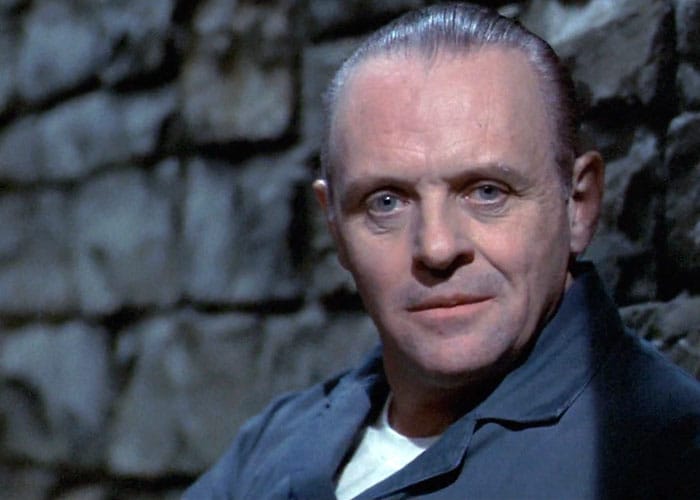
They were compèred by Lennart Westerlund, whose slick hair and composed and shadowy initial presentation on the Folkets Hus stage elicited more than a passing resemblance to Hannibal Lecter before his fantastically dry and entertaining humour became evident and rendered him much more like a Swedish Dr Fraser Crane.
(It's worth mentioning that Lennart is arguably one of the most influential figures of the modern swing revival: he was one of the earliest members of the Swedish Swing Dance Society, a founding member of the famous Rhythm Hot Shots, one of the original masterminds behind establishing Herräng Dance Camp [and still very much a part of its organisation today], and the man responsible for bringing Al Minns and then Frankie Manning to Europe. He's also a peerless MC.)
The daily meetings served to share any important information with the camp (plumbing issues, taster classes and other activities that were on, schedule changes, guest speakers, etc.) but was also a variety show in its own right with live performances from the pros and the Herräng Chorus Line, video clips from days when swing and jazz were in their pomp, impromptu interviews with VIPs, and additional entertainment from Lennart, and it was all of a genuinely high production value that had me thinking that I should really go to see more shows at home.
Lennart with the results of the shoe survey!
As I was there longer than one week I was also impressed that none of the material was rehashed but was completely original every night. In Week 3 a theme of the meetings revolved around some genuinely interesting swing statistics that I am keen to share in a later article, many of which came from a PhD study by one of the dancers Ahter Sönmez (I thought my PhD was on cool stuff but doing one on Lindy hop is a whole other kettle of fish), but some of the research for these statistics was a bit more 'in house' including asking the female pros how many pairs of shoes they brought to camp: Alexandra Alhimovich topped the board at 14!
After the meeting concluded there was the option of either attending a talk in the Library, featuring one of the big names in attendance that week (Norma Miller, Chazz Young, Dawn Hampton, Chester Whitmore, Ryan Francois... Frankie Manning Ambassadors *ahem*), or going to one of the taster classes, of which there were usually three on any given night.
The tasters were led by camp attendees, often teachers in their own scenes, and covered all varieties of dance: slow drag, blues, balboa, collegiate shag, St Louis shag, solo jazz, tap, street, hip-hop, west coast swing, traditional Polish dance, as well as additional speciality classes on things such as 'dips on a crowded floor' and 'advanced flirting.'
And then after these had finished, normally at 11pm, beginners' hour kicked off allowing the less experienced dancers the opportunity to have the floor to themselves and music at a more accommodating tempo before the rest of us arrived and often stayed there until breakfast the following morning!
As for breakfast and other meals there were a number of options on-site or nearby with a couple of cafés and pop-ups all within walking distance. One of the perks of my Frankie Manning Ambassador Scholarship was that I was given a meal-card that covered breakfast, lunch and dinner in any of the on-site establishments (Heaven's Kitchen, Blue Moon Café, Bar Bedlam, Ice Cream Parlour) and it was immensely convenient - not only did I not have to cook or even think about what to eat but the food was of a pretty high standard (breakfast and dinner were also 'all you can eat!') and the dining tent was one of the best places in camp to meet new folk and get chatting.
It is also were a few of my Herräng highlights took place.
One of my first nights in Herräng Chazz Young announced at the end of the daily meeting that he wanted to speak to all of the Frankie Manning Ambassadors, so I accordingly introduced myself to him and was told that "Miss Dawn Hampton would like you to join us for dinner tomorrow night."
Now there's an offer I couldn't refuse!
Valerie Salstrom was also there and it was really great to get chatting to her, and the following week we also had dinner with Norma Miller and Chester Whitmore, as well as Sing Lim (the primary flagbearer for swing dancing in Asia), and Elliot Donnelley (one of the minds behind the Frankie Manning Foundation and a passionate supporter of Lindy hop).
Getting to pick the brains of Lindy luminaries on a one-to-one level was incredibly special, and I'm going to post another article about that shortly, but even just to hear some of their stories first hand was a fantastic experience. The library talks also facilitated that on top of a handful of lectures that were included in our class schedule from Dawn and also from Lennart.
Lennart's talk covered the background to the growth of Lindy in Europe and the beginning of Herräng whilst Dawn shared a bit about her own past and her love of Herräng before imploring us to always "let the music move you."
Dawn then put on a few of her favourite tunes and demonstrated this mantra herself, despite her obvious frailties at 87 years old, by dancing to Count Basie's 'Splanky' and Jimmy Lunceford's 'For Dancers Only' before queuing up one of the funnier moments of my whole trip with a bit of bhangra and then asking all of us to all get up and dance along with her.
Dawn dancing with Adam Brozowski
For these talks several classes were combined and in my case all of the advanced and intermediate-advanced classes were put together but, when Dawn hit 'play', you wouldn't have known it as an entire room of incredibly talented Lindy hoppers were immediately reduced to looking like an average wedding party. It was a fantastic equaliser to know how normal everyone was and it cracked me up.
Friday nights were the only ones that didn't have daily meetings but that was to accommodate the festivities of the big themed party nights and their associated activities and during my stay these themes were 'Become Your Opposite' and 'Invaders From Mars.'
I have to say, the whole 'Become Your Opposite' theme triggered a minor existential crisis and it was clear that plenty of people were similarly baffled by it as there wasn't much in the way of costume cohesion, aside from a few with their normal clothes on upside-down, backwards or cross-dressed. Either that or I was particularly unperceptive of the nuances in others' outfits but I figured that since I was surrounded by a whole load of folk who didn't know me, they probably wouldn't know who I wasn't... if you follow my logic!
The 'Invaders From Mars' party, however, was a lot more fun, was built up solidly throughout the week and it was obvious that people knew how they were going to turn out. And on top of that, they had bubble football!! I'd wanted to try that for ages so I was literally bouncing around with joy... and then mild concussion.
As for the actual dancing itself - socials and teaching - I'll talk about that in my next article!
Yeah... if you were expecting an article on Herräng to actually mention dancing you may now be feeling a tad shortchanged... sorry! But it's for your own good, seriously, this would have been far too long otherwise. Just believe me when I say that the dancing was rather good. And that would be a chronic understatement.
Also, it would be completely remiss of me not to once again thank the Frankie Manning Foundation for sponsoring my entire trip - flights, accommodation, food, classes, socials, the works! - through their ambassador scholarship but also for consequently putting me in a position to meet so many wonderful people that will surely have a huge impact on my dancing future and hopefully that of my home scene in Belfast.
It was an absolute pleasure to meet and hang out with the other FMF Ambassadors Tamisha, Brendan, Muriel, Josh, and Rafal, as well as so many other fantastic dancers, scene leaders, teachers and pros and I sincerely look forward to crossing paths with everyone again soon!
Frankie Manning Foundation Ambassadors 2015, L-R: Joshua Mclean, Rafal Pustelny, Brendan & Muriel Argent, and myself. Tamisha Anthony is missing from this photo but Frankie is also keeping a watchful eye over our shoulders!
Maxence & Emeline... two of my favourite west coast swing dancers.
While the bulk of my posts on this blog have been about Lindy hop don't let that fool you into thinking that Lindy and I are in a monogamous relationship. West coast swing also vies for my affection and, as I mentioned in one of my first articles, choosing a favourite between these styles would be like asking a parent to rank their offspring.
However, in my home city of Belfast, Lindy hop is on offer at least four nights a week but west coast swing only comes out to play on Wednesdays.
A comparison of the size of these two communities in Belfast is stark as I reckon we could rustle up well over 100 Lindy hoppers just in the city alone while until recently, the entire island of Ireland might have struggled to fill a WCS party in an elevator.
One of the reasons I also love west coast swing as much as I love Lindy hop is because of the entirely different way it makes me feel and it caters to a vastly different form of expression. Comparing them using the simplest analogy I can think of: the difference between my two favourite styles is similar to that of my two favourite instruments.
Dancing Lindy hop is like playing the drums. Steady rhythm is king, the beat pulses through you and you can use the full dynamic range of the music to bounce lightly or build up to an almost unsurpassed manic euphoria. Incredible satisfaction can come from a slower tempo and the opportunity to go to town on musicality, but it can be at its most intoxicating when you're fighting against exhaustion until you absolutely must stop to rehydrate or change shirts.
However, west coast swing, is more like playing an acoustic guitar. It allows for limitless personal expression and an emotional intimacy I've yet to experience from any of the other instruments or 20+ dance styles I've tried.
And west coast swing is definitely not just about schmaltzy fluff as I'm a long-time fan of hip-hop and it's amazing to finally be able to dance to its heavy bass and blindingly obvious breaks. I've thankfully grown out of my 'Eminem phase' when a younger, skinnier, bleached-hair me was was regularly attired in clothes more befitting of an overweight rapper with an aversion to belts, but I still love the music.
In fact, one of the greatest virtues of west coast swing is its sheer versatility. You can dance it to anything the DJ can throw at you: hip-hop, R&B, pop, deep house, funk, dubstep, electroswing, dance, salsa, indie, country, blues, classical... I've west coast swung to all of them and I can't think of another dance style that can claim to have even half of its dexterity.
It's through WCS that I've recently discovered that funk isn't actually such a terrible genre after all, and that the delightful chorus of dial-up modems known as dubstep actually provides some of the most challenging but exhilarating experiences you can have on a dance-floor. The instant adrenaline kick I get listening to Lindsey Sterling's 'Crystallize' or the Omega remix of Ellie Goulding's 'High for This' just gets me pumped!
But considering its mastery of myriad music genres I'm amazed WCS doesn't have a more ardent following, especially since you really can pull it out anywhere;including club nights and, that ultimate test of rhythmical insecurity: weddings.
However, I think that this versatility is also a double-edged sword because it doesn't benefit from the same identity by association that other styles do: I immediately think of Lindy hop when I hear big band music and if I hear blues, salsa or tango music my thoughts go to those dance styles. But west coast swing just doesn't have that same dance monopoly on a particular music genre.
It also doesn't have a specific affiliation with one city, country or culture the way some dances do - Lindy hop hails from 1920-30s Harlem, and tango from late 19th century River Plate basin of Argentina and Uruguay - and these dances benefit from the proud promotion of a civic or national heritage and identity in a way that west coast swing can only dream of.
Additionally, every so often a style (re)appears that benefits from 'cousins' in the dance style family. Blues dancing appears to be undergoing a bit of a revival and as it appeals to the greater retro swing fraternity and has elements that can be interchanged with Lindy hop, balboa and solo jazz, there is a natural attraction for dancers of one of these styles to learn another. The same can be said of a number of Latin or ballroom dances but in the case of west coast swing it is distantly related to all but close to none; and must forge its own path.
So, and possibly for these reasons, west coast swing is rarely the first dance someone learns with salsa, tango, Lindy hop, or ballroom often providing the first taste of the partner dancing experience. For some, learning one dance style is enough, but there is an additional problem that comes from starting with another style that can sometimes act as a discouragement: pride.
Particularly if you've already reached a (high) level of competency in one dance style, the idea of starting afresh at the bottom of the ladder is frustrating in the extreme, and I know I've experienced it. Getting things wrong again and again really melts your head and can have you craving the comfort of familiarity.
As west coast swing tends to be a dance people discover after they've reached a certain grade of mastery elsewhere, some just can't cope with being at the wrong side of the bell-curve and give up before it gets interesting.
One of the things I most love about west coast swing is that it seems to be one of the closest dances to a 'conversation' you can have on a dance floor - the traditional 'lead' and 'follow' roles still exist but there is much greater scope for the follow to take control of a move and the exchange between the lead and follow is two-way.
To further abuse this analogy: WCS dances are a bit like a 'Q&A' and although the lead asks the first question, the follow responds and includes a question of their own with the most invigorating dances being a non-stop back and forth discussion where plenty of other styles are largely just monologues with the lead droning on.
The input from the follow should not be confused with backleading - that is a universal dancing taboo - but in west coast swing the intentions of a lead for a familiar pattern are usually transmitted to the follow within the first 2 beats and the follow is then given the opportunity to keep it basic or embellish. And as long as the connection is maintained it is the lead's responsibility to provide a platform for the follow to do their thing.
I discovered at about the age of 18 that, whilst grunts and shrugs have their place, a lot more can be communicated through actual words and conversation has become one of the greatest joys of my life, and I could easily natter away to myself until concerned white coats begin to close in. But conversation with an actual person is so much more fun.
The same goes for dancing west coast swing - I could lead a follow in what I want them to do for an entire dance but what I especially enjoy is letting them express themselves and consequently having them challenge me to keep up... it gives me such a buzz.
But what truly sets west coast swing aside from the other styles I've tried is the connection established with your dance partner, and I discovered it is something that just cannot be experienced if you only dip your toe in for a few classes.
In dances like tango, blues, and bachata the lead often comes from the core/chest and the closer hold allows for the fluid transmission of rhythm and patterns to the follow, with both parties largely maintaining a close physical proximity and moving as one.
Whereas, west coast swing is more like Lindy hop and partners are generally led at arms length so the connection between lead and follow must be transmitted through many more joints (shoulders, elbows, wrists, knuckles) and so has a greater potential to be lost without good rhythm and frame.
Lindy is helped by its incredibly joyful bounce or 'pulse' that is maintained by both the lead and the follow as it keeps both partners on the same page and the same beat. In west coast swing, however, there is no pulse and the rhythm and steps are instead communicated by a more nuanced weight transfer.
This can sound more technical but as with learning any dances, nothing comes instantly and it just takes a little bit of practice of WCS, but when you first properly experience the stretch and compression that is the foundation of west coast swing... holy smokes!!
And for anyone interested in taking things up a notch and actually competing, this is a much more attractive proposition in the world of west coast swing than Lindy hop or balboa for example.
In almost all dance styles, competitions have a 'newcomer' section that are only open to those who started dancing within the previous year, but for everyone else it's just one big open heat.
The more ambitious may enjoy the challenge of competing against the best but generally that can just be an exercise in futility. For some, dancing is their life - it may be their full-time job, maybe they are simply gifted naturals or maybe they were selectively bred from pedigree swing livestock and danced their way out of the womb - immediately grabbing the midwife and throwing an aerial.
For the rest of us, however, it's a hobby. A passion that, despite it being one of the greatest joys that life can offer, must be balanced against work, family, friends and other commitments, and so our progress and swing education is slower and we simply cannot compete with everyone and anyone.
In west coast swing, however, the competitions allow for this and are accordingly split into ability levels: newcomer, novice, intermediate, advanced, and Allstar, with the best of the best then invited to compete at 'Champion' level. For the fast learners and naturals, progression is in no way hindered by this model, but for the hobbyists, the benefits are immense and as competitions always involve very generous prizes at all levels, the same incentives exist for all competitors. Why this model isn't more commonplace baffles me.
Before I finish, however, I want to add a cautionary tale, and that is about those whose loudly-voiced opinions would dissuade others from giving west coast swing a go, and self-styled 'swing purists' I'm looking right at you with my brow well and truly furrowed and my nostrils slightly flared. To again apply a parent/offspring analogy: I don't appreciate it when one gets picked on.
There is generally a lot of love between dance styles as well there should be (and this is no more apparent than at the Boston Tea Party), but sadly I have read and heard Lindy hoppers and others indignantly feigning offence at west coast swing's audacity to sully the good name of 'swing' because the music it is often danced to lacks a traditional swing element - dismissing it as an illegitimate child they hope will take a long walk off a short cliff.
I do agree to a point: R&B and pop make up the bulk of WCS playlists at the moment and that music rarely swings the way Benny Goodman or Count Basie did. But when I Lindy hop to unconventional music, as I recently did to one of the many nonsensical offerings of German EDM masters Scooter (to "The Logical Song"... it was quite the experience), I don't believe the dance steps ceased to be Lindy hop just because the music wasn't swing.
If the music doesn't move you then I have no axe to grind. I imagine everyone who dances the styles they dance has chosen these styles because, first and foremost, they love the music it is associated with, and for some maybe the current WCS playlists just don't do it for them.
Although, as 'pop' music is so named because it is the most popular music genre, how the popularity of west coast swing in Northern Ireland doesn't quite mirror the popularity of the music baffles me, especially considering that, after salsa, west coast swing is the fastest growing partner dance in the world.
But for a Lindy hopper of all people to write off another style simply due to what amounts to unabashed snobbery implies that they don't actually appreciate the history of our beloved Lindy hop at all.
It takes little research on Frankie Manning - you know, that guy who's pretty much responsible for Lindy hop - to learn that he and his fellow Lindy hop pioneers were commonly the subject of dismissive and pejorative statements from event organisers, agents, and other dancers who all viewed Lindy hop with utter disdain throughout its early years.
In fact, Frankie used these negative experiences as an additional incentive and stated in his autobiography that he hoped his legacy would see the elevation of Lindy hop to the same level of international recognition as more established dance styles like ballroom and ballet. I believe Frankie succeeded (and as it is currently Frankie Month there are a couple of ways we can celebrate his legacy!), but when a Lindy hopper makes disparaging remarks about another dance style that's attempting the same I find it really saddening.
As an aside: what does the word 'football' mean to you? I imagine if you are from the USA or New Zealand or Australia or the Republic of Ireland or England you'd each offer very different responses. American football, Australian rules football, rugby union football, rugby league football, Gaelic football, and association football are all vastly different sports. Association football (known as 'soccer' to some) may lay claim to the original use of the word and certainly has more foot-to-ball contact than the rest, but try telling players or fans of the other versions that you find their appropriation of the term 'football' offensive without sounding sanctimonious.
Just as with football, what I think the varied use of the name swing demonstrates is a celebration of a shared heritage and a provenance considered worth retaining.
Lindy hop begat west coast swing, and the evolution of the latter has mirrored that of popular music. Just two decades ago west coast swing was most commonly danced to blues and other genres with a more obvious swing, but as contemporary R&B and pop came to the fore, displacing longer established music from the mainstream, west coast swing adapted to stay relevant.
In comparison, the demise of big band and the advent of bebop almost spelled the beginning of the end for Lindy hop, which obviously relies on a more rhythmically accessible variant of jazz, and it would not exist today were it not for Frankie and retro revivalists. For that I'm ecstatically grateful, but if other dances have had to evolve and adapt to keep people on the dance-floor I think that's a good thing.
Frankie introduced an iconic style of Lindy hop that differed from that of Shorty George and his peers, and decades later, by the time Frankie returned from his war-induced swing hiatus, the new kids on the block were swinging a different way yet again. In fact, Lindy hop has changed notably just in the past 20 years and if you look up Youtube clips of competitions from the 90s, the style changes between then and now are considerable - but it is still Lindy hop.
The same goes for west coast swing, and if you watch the video below of 'Team USA' strutting their best WCS stuff at the US Open in 1991 the Lindy genes are much more obvious than they may be today.
In short, I hope people won't be put off by the swing Pharisees. And hey, if Frankie Manning himself called west coast swing 'swing' (as he did in his autobiography) then who are we to say otherwise!
I'd love people to check out their local west coast swing scene and especially if you're in Belfast! I've seen what can happen in only two years in Israel so if anyone is interested you'll find a bit more information about local WCS classes on our website: West Coast Swing NI, but, in brief: they are on Wednesday evenings, from 7:30pm, at Windsor Tennis Club.
And, as knowing a few people always helps, if any Belfast Lindy hoppers are curious to give it a go, if you come along to class you'll recognise a number of familiar faces as the people teaching and learning west coast swing in Belfast are also pretty much all Swing Belfast Lindy hoppers!
May is Frankie Month and there are a host of ways it is being celebrated, including World Lindy Hop Day on Tuesday the 26th May - the date of Frankie's birthday - but as not everyone can get to Rome for this year's shindig the Frankie Manning Foundation has come up with a couple of ways you can get involved in your own community to celebrate Frankie's legacy and hopefully bring the swing to the unswung!
To start with, throughout the month we are encouraging people to recreate famous Frankie photos and share them on social media with the hashtag #IAmFrankieManning. Choose your favourite Frankie photo, strike his pose, snap and share and they will appear on the #IAmFrankieManningtagboard, or use them as your profile photo for the month of May.
Next up, on Frankie's birthday, take your love of Lindy to work with you and Suit up Swing Style!
Don your favourite swing threads that best capture the spirit of the Savoy Ballroom in its 1920-50s pomp, have your photo taken at work, on the street, public transport, wherever you go, share these with the hashtag #TheLindyLook and hopefully you'll trigger some conversations and spread the love of Lindy!
All photos will appear on #TheLindyLooktagboard and if you can't wait until the 26th or fancy an extra challenge, why not dress the part for the entire month of May!
And if you'd prefer to join in via email, just send any of your Frankie month pics to photos@frankiemanningfoundation.org with the appropriate hashtag and they'll be shared on the FMF website!
Chick Webb - Frankie's favourite resident orchestra leader at the Savoy Ballroom
I recently read Frankie's autobiography and it's a cracking read for anyone who wants to get a better idea of the history of Lindy hop as well as the life of its greatest exponent (and thanks to Scott Magowan for lending me it!) but it also listed a few tracks that were especially prominent in Frankie's memories so I have taken seven of them and have provided a little explanation for why they featured.
• Christopher Columbus • Although Frankie started his dancing career at the Alhambra Ballroom in Harlem it was at the Savoy Ballroom where things really took off and he recalls that, every Saturday when the dance contests were in full swing, 'Christopher Columbus' was the tune regularly chosen by the orchestra leader. The orchestra was usually one of the house bands who don't appear to be on youtube but in this instance I suppose we'll just have to make do with a version by the King of Swing himself, Benny Goodman.
• Clap Hands! Here Comes Charlie • As a great example of kind of rarefied air that Frankie was breathing on a regular basis, he witnessed numerous "Battle of Bands" in the Savoy between some of the luminaries of the Swing Era. Count Basie and Benny Goodman (along with Gene Krupa) occasionally played in the Savoy but in Frankie's mind at least, no one out-swung Chick Webb, and 'Clap Hands! Here Comes Charlie' was one of Chick's most swingin'est tunes.
• Down South Camp Meeting • Frankie shaped Lindy hop in a way like no one else: the crouched posture, breaks, and ensemble routines amongst other things were all his creation but it is air steps for which he is best known and it was during a dance contest at the Savoy where he and Frieda Washington first debuted the revolutionary pattern and 'Down South Camp Meeting' was the tune, played specially by Chick Webb, that accompanied them. Again, I can't find any record of Chick's version so heeeeeere's Benny!
• Posin' • As I have just said, Frankie also introduced 'breaks' into Lindy hop by freezing on a natural pause in the rhythm until the music picked up again and he recalls that Jimmy Lunceford's record 'Posin'' was the one that first gave him the inspiration.
• Stompy Jones • Frankie's first ever stage show happened to coincide with a one-week residency of Duke Ellington. He remembers being reduced to a shivering wreck at the thought of performing with a jazz legend already in his prime and when he arrived at rehearsals and witnessed every other act handing music over to 'the Duke' when he had none to give it didn't help allay any fears of being found out for being an amateur! When asked for music suggestions, Frankie offered a few more familiar Chick Webb tunes as he was unaware of Duke's reputation for rarely playing the work of other musicians but in the end they settled on Stompy Jones and as you can well imagine, Frankie made it work.
• Every Tub • Frankie confessed that, sometimes, he just liked to show off and two of his favourite records for doing that were 'Jumpin' at the Woodside' or 'Every Tub' by Count Basie. Woodside gets a lot of airtime so in this instance I have plumped for the other one!
• Shiny Stockings • And finally, I couldn't possibly make a mini music playlist about Frankie if it didn't include his favourite record of all time: 'Shiny Stockings' by Count Basie.
In one of my first posts I briefly touched on lindy hop genealogy and how it subsequently spawned a huge variety of new styles but I think it's important to mention just exactly how Lindy hop came to exist in the first place.
I'm not going to ramble ad nauseam about everything there is to know - for that there is wikipedia and the joys that an afternoon of clicking on blue links can bring - but on the off-chance your next pub quiz features a round on Lindy hop then hopefully this will have you covered. That said, if anyone wants to see an incredibly thorough family tree of the extended swing family then LindyPenguin offers an fantastic flowchart showing just that.
It's also again worth highlighting that west coast swing owes as much to lindy hop as east coast swing so hopefully no one of a westie persuasion will be put off from reading on!
The two oldest styles perched at the top of the Lindy hop tree, Jazz and Two Step, were popular at the turn of the 20th Century and came from quite different backgrounds and cultures. Jazz drew heavily from African American roots whilst Two Step was more popular within white communities but the evolution of the Charleston was notable for its more mainstream popularity as it was danced in all corners of the USA.
With the advent of the 1920s a style of dancing called the Breakaway had developed in Harlem, New York which combined aspects of Jazz, Two Step, Charleston and other Ragtime dances to create a partner dance that, revolutionary at the time, incorporated the eponymous 'breakaway'. Up to this point, solo dances were... well... solo, and partner dances involved a two-handed connection between lead and follow at all times but in the breakaway partners would switch between the two-handed 'closed' position and a novel one-handed 'open' position.
Then, by the late 1920s and with influences from the Breakaway and original aspects from the Charleston and solo Jazz, Lindy hop got its major breakthrough with Harlem once again front and centre with the jewel of its crown, the Savoy Ballroom, considered its rightful home.
The Savoy hosted regular dance contests and socials and legend has it that it was at one of these events in 1928 that a newspaper reporter happened to ask one of the guys dancing for the name of dance style he was so impressively performing and was given the response: "It's the Lindy hop!"
The dancer in question was George "Shorty" Snowden (nicknamed for his diminutive stature and also for whom the "shorty George" jazz step was named) and he is widely recognised as being one of the originators of the dance as well as one of its greatest proponents - both in terms of his reputation as one of the finest dancers to ever grace the Savoy and his establishment of the first professional Lindy hop troupe: the Shorty Snowden Dancers.
Shorty's inspiration for the name "Lindy hop" came from the (then) recently occurred first non-stop flight across the Atlantic Ocean from New York to Paris by Charles Lindbergh. Several newspapers, including the Chicago Daily Tribune*, reported the momentous event with the headline "Lindy hops..." and on Shorty's appropriation it became associated with the new dance style he and others were popularising. [*link to archived copy of that newspaper edition detailing a subsequent trip by Lindbergh to St Louis]
However, Shorty and the rest of the Savoy originators of Lindy hop danced a style that would be almost unrecognisable to many of today's enthusiasts as it showcased obvious ballroom influences through an upright dancing posture and it wasn't until the arrival of a new kid on the block, a certain Frankie Manning, that the now ubiquitous Lindy shape began to proliferate.
Combined with Frankie's obvious talent for dancing, the striking visual effect, according to observers, of a style and stance that made him look like he was 'flying' meant that his new posture was soon the one being replicated throughout the Savoy and his invitation to join "Kat's Korner" - an area of the Savoy dancefloor inhabited by the best of the best - further cemented Frankie's growing reputation.
But what truly launched Frankie into the Lindy hop pantheon was arguably his greatest contribution to this dance style: Frankie's creation of aerial moves or "airsteps" in 1935.
Inspired by the way Shorty often finished dances with his dance partner, Beatrice "Big Bea" Gay (who towered over Shorty by a considerable margin), comically carrying him off on her back, Frankie and his partner Frieda Washington spent several weeks in his mother's apartment with a mattress on the floor (initially raising the suspicions of his mother) devising a way to go one better and safely throw Frieda over his shoulder in time to the music.
A dance contest hosted in the Savoy provided the perfect opportunity for Frankie and Frieda to introduce their genius to the masses and when it culminated in a dance-off with Shorty and Big Bea competing against Frankie and Frieda the stage was set.
Shorty and Big Bea opted to go first but after two neck-and-neck rounds it came to Frankie and Frieda to offer their third and final response and they flawlessly executed the "over-the-back" to send 2,000 Savoy spectators into euphoria.
Frankie also introduced ensemble routines, breaks and a host of other moves to the Lindy hop lexicon that are now commonplace but it was his tireless promotional work in his later life along with other original Lindy luminaries such as Norma Miller - pushing Lindy into new corners of the world and fanning the flames of its popularity - that led to the swing revival of the 1980s that spawned the substantial global swing community that exists today and that makes people like me very happy indeed.
As previously posted, I had been asked by the Frankie Manning Foundation to contribute an article about Frankie. Last month I published just the first half of it but rather than just give you the tail end of an article I decided to share the whole thing at once!
By all accounts, Frankie had a gregarious personality and a genuine knack for teaching but had these not also also been allied to a radiant passion it is likely that lindy hop would not be as popular as it is today and I felt that this was something that deserved to be more celebrated.
I have spent many years in education, first as a student and now working at a university, and along the way I've met academics who have really affected me - mainly for being fantastic but occasionally for being completely awful and the key distinction between those groups was either an abundance or absence of passion for their own field.
The great educators just bubble with excitement for what they do and entice you to feel the same way. Some have more traditional methods whilst others head off on the most amazing technicoloured tangents but no matter what they say, it sticks, and you can only become infected by their zeal.
The not so great ones, however, occasionally challenge your natural instinct to keep breathing and I can remember one particularly prosaic lecture where, in an attempt to entertain myself, I assembled a variety of confectionery items and other things with labels still attached and set about deciphering barcode. The raw excitement of that lecture has somewhat obscured my memory of what it may have been about but I know that by the end of it I could look at the thickness and arrangement of the lines and determine the numbers that should be typed beneath them.
These may seem like slightly random anecdotes but I share them because they are genuinely relevant and not only to the university lecture theatre but to teachers in a wide variety of disciplines and that includes dancing. Truthfully, I have not yet encountered any apathetic lindy hop teachers (who I have found to all have an infectious contentment with their lot) but I have found it to be the case in other styles. It's not that such teachers don't have a passion for dancing but it seems that this passion is not something they want to risk sharing with their students and to borrow a sporting analogy: the best athletes don't always make the best coaches.
Frankie, however, not only seems to have been a fantastic dancer but was also able to translate that into being an excellent proponent of the hobby he loved so dearly.
As a newcomer to the lindy scene, having only started dancing last year, I never had the opportunity to learn from or even meet Frankie, so I can only share second-hand stories. Nonetheless, what really comes through from the people I know who met him, learned from him or danced with him is how utterly happy lindy hop made him and how Frankie had a steadfast desire to share his elixir. And so, with this in mind, I chatted with a few folk I know who took it from his hand and drank deeply.
Potentially, there are plenty of people I could contact who had well known connections with the man himself but I have specifically sought out the ones who have directly influenced me in my brief but blossoming relationship with lindy hop and whose passion to continue Frankie's legacy has been clearly apparent to me.
There's no better place to start than in my own home city of Belfast (which, along with London and Manchester, was one of the venues for Frankie's first visit to the UK as part of a Whitey's Lindy Hoppers tour in 1937) where I have benefited from the effervescent tutelage of Sharon Matchett, Richard Turner, Adib Ma'ani-Hessari, and Bahia Ma'ani at Swing Belfast and it is Bahia who had first-hand experience of Frankie's passion when they shared a dance at a social celebrating his birthday.
I can well imagine Frankie being seriously in demand in any social never mind the one on his birthday and Bahia admitted that this also happened to be fairly early on in her lindy career so the usual fears of inadequacy at first socials were likely further magnified by the status of the person she was dancing with, which is probably why, Bahia confesses, she was too scared to speak to him. But that didn't stop Frankie from beaming at her throughout and putting her at least a little more at ease.
By itself, a single dance may not illustrate much but Bahia remembers being amazed, not only by his obvious joy and the gentleness of his lead, but how Frankie kept getting up and going despite the high energy demands of a night of dancing and even in his old age it was clear that his passion for lindy hop had kept him young and healthy when other octogenarians were developing more sedate proclivities for crosswords, velcro and beige.
Echoing Bahia's sentiments is Paul Neary - the incredibly affable Australian responsible for bringing swing dancing to Galway and, along with the help of his wife, Sarah, hosts two fabulous workshop weekenders, the only Lindy Hop Championships in Ireland and is at the vanguard of swing dancing's expansion across the Emerald Isle. But Paul was also privileged to learn from Frankie directly - firstly at classes in his native Melbourne in the early 2000s and shortly after at the famed Herräng dance camp in Sweden.
clockwise from top left: Bahia Ma'ani and her husband, Adib; Frankie Manning & Norma Miller; Scott Cupit in full flow in Wilton's Music Hall; Paul Neary and his wife, Sarah.
Paul also emphasised that any time Frankie could dance he would dance and that apart from taking a few breaks to allow his body a moment to recover there was nothing that was going to stop Frankie from doing what he loved, but it was in the workshops that Paul was most aware of the effect Frankie's ardour had on others.
At his first workshop with Frankie in Melbourne, Paul recalls that when Frankie walked into the room you just knew who was in charge. Now, I'm just shy of 6ft tall (1.8m for those reading in metric) and, having stood beside him on several occasions I know that Paul is one of the few lindy hoppers I've met with a clear view of the top of my head, but even he remarked that Frankie cut an imposing figure regardless of his advancing years.
However, Paul also remarked that whilst Frankie had a big physical presence (and a booming voice to match) that had the potential to be intimidating, you were instantly drawn to him by his magnetic enthusiasm, subtle humour and warm intonation: "the way he spoke of dancing - it was in such a voice that he always sounded happy when talking about it and you were automatically enamoured with what he was saying."
Paul joked that Frankie had an 'old-fashioned' playfulness when interacting with follows but this vintage way of doing things was also reflected in his style of teaching as he preferred going over the classic moves he had learnt with Whitey's rather than their newer variants - content which, had it been taught by anyone else, may well have bored some, but Frankie's electric enthusiasm ensured everyone remained thoroughly invigorated.
According to Paul, Frankie's commitment to presenting not only the classic moves but also the stories, culture and history behind them was a hallmark of his teaching and, from my own experience at least, this is something that clearly resonated with Scott Cupit, another Australian (what's in the water down there?) and the humble mastermind behind Swing Patrol - a lindy hop collective with a UK base in London but, when combined with its Berlin, Melbourne, Sydneyand Tasmania siblings, probably reach more people on a weekly basis than any other swing crew on Earth.
I first met Scott at the London Swing Festival, a fantastic weekend of workshops, competitions, displays and socials run by Swing Patrol (and coordinated by Scott's wife, Laura), where Scott was teaching alongside the wonderful Trisha Sewell. One of the moves that Scott and Trisha taught us was the 'Mini-dip/Minni-dip' and Scott explained to those who were unaware (myself included) that it was so named, not because it had a larger variant, but because Frankie was in Minneapolis when he was asked what this new move he was teaching was called - prompting Frankie to use his location as inspiration.
I mentioned to Scott that this kind of anecdote utterly fascinated me and he was quick to implore how he felt it was a key part of honouring Frankie's legacy to share background information such as that and to educate aspiring and even experienced lindy hoppers just where exactly the dance they love came from.
Scott regularly stressed just what a privilege it had been to have learnt directly from Frankie and it was clear that he had been infected by Frankie's sheer love for lindy from their first meeting as, after attending his first workshop with Frankie, Scott (then still based in Australia) made the firm resolution that he "didn't care what it cost, we had to bring him to Melbourne!"
And if anyone was in any doubt about just how passionate Frankie was for lindy hop they needed only spend some one-on-one time with him to know that he didn't need to be talking to an entire class of students for that passion to seep out.
One of Scott's duties when Frankie visited Melbourne was to drive him between venues and this provided Scott a rare opportunity, as an audience of one, to hear some of Frankie's many stories from his days in the Savoy and his subsequent travels and Scott easily recalls that Frankie's eyes would just light up when talking about swing dancing and how listening to the swing of the big bands still continued to make him just want to move.
Additional to some more light-hearted advice about the dangers of dating a non-dancer Frankie told Scott how much he wanted to build the reputation of lindy hop so that it could enjoy the same international public recognition that other dances styles benefited from and I think it is safe to say it is well on its way.
There are many who should be celebrated for their contribution to the global lindy hop community, whether as the originators or as those driving its modern expansion, but only Frankie can truly lay claim to both, and as much as lindy hop exists because of Frankie, equally it seems that Frankie existed because of lindy hop and the passion for it that bubbled within him.
This article can also be read on the Frankie Manning Foundation website and I encourage you to check out their site and enjoy the resources they have on the main man!
it's hard not to find a photo of Frankie displaying his sheer delight at what he did
This is the first half of an article that is featured in its entirety on the Frankie Manning Foundation's website but I shall also be sharing the second half of it here next month!
The Frankie Manning Foundation recently asked me to contribute an guest post about Frankie and being given such a broad remit for such an important figure was a little daunting as there are already plenty of easily accessible resources that detail all of the key events in his life (and, as ever, Wikipedia provides a good place to start). But it occurred to me that something was rarely presented in many of the emotionally-neutral chronological pieces on his life and that was a prominent mention of his pure and unbridled passion for lindy hop.
By all accounts, Frankie had a gregarious personality and a genuine knack for teaching but had these not also also been allied to a radiant passion it is likely that lindy hop would not be as popular as it is today, and I felt that this was something that deserved to be more celebrated.
I have spent many years in education, first as a student and now working at a university, and along the way I've met academics who have really affected me - mainly for being fantastic but occasionally for being completely awful and the key distinction between those groups was either an abundance or absence of passion for their own field.
The great educators just bubble with excitement for what they do and entice you to feel the same way. Some have more traditional methods whilst others head off on the most amazing technicoloured tangents but no matter what they say, it sticks, and you can only become infected by their zeal.
The not so great ones, however, occasionally challenge your natural instinct to keep breathing and I can remember one particularly prosaic lecture where, in an attempt to entertain myself, I assembled a variety of confectionery items and other things with labels still attached and set about deciphering barcode. The raw excitement of that lecture has somewhat obscured my memory of what it may have been about but I know that by the end of it I could look at the thickness and arrangement of the lines and determine the numbers that should be typed beneath them.
These may seem like slightly random anecdotes but I share them because they are genuinely relevant and not only to the university lecture theatre but to teachers in a wide variety of disciplines and that includes dancing. Truthfully, I have not yet encountered any apathetic lindy hop teachers (who I have found to all have an infectious contentment with their lot) but I have found it to be the case in other styles. It's not that such teachers don't have a passion for dancing but it seems that this passion is not something they want to risk sharing with their students, and to borrow a sporting analogy: the best athletes don't always make the best coaches.
Frankie, however, not only seems to have been a fantastic dancer but was also able to translate that into being an excellent proponent of the hobby he loved so dearly.
As a newcomer to the lindy scene, having only started dancing last year, I had never had the opportunity to learn from or even meet Frankie, so I can only share second-hand stories. Nonetheless, what really comes through from the people I know who met him, learned from him or danced with him is how utterly happy lindy hop made him and how Frankie had a steadfast desire to share his elixir. And so, with this in mind, I chatted with a few folk I know who took it from his hand and drank deeply.
Potentially, there are plenty of people I could contact who had well known connections with the man himself but I have specifically sought out the ones who have directly influenced me in my brief but blossoming relationship with lindy hop and whose passion to continue Frankie's legacy has been clearly apparent to me.
Swing Belfast's Bahia Ma'ani (L), and (R) Frankie Manning at the far left of a Whitey's Lindy Hoppers lineup
There's no better place to start than in my own home city of Belfast (which, along with London and Manchester, was one of the venues for Frankie's first visit to the UK as part of a Whitey's Lindy Hoppers tour in 1937) where I have benefited from the effervescent tutelage of Sharon Matchett, Richard Turner, Adib Ma'ani-Hessari, and Bahia Ma'ani at Swing Belfast and it is Bahia who had first-hand experience of Frankie's passion when they shared a dance at a social celebrating his birthday.
I can well imagine Frankie being seriously in demand in any social never mind the one on his birthday and Bahia admitted that this also happened to be fairly early on in her lindy career so the usual fears of inadequacy at first socials were likely further magnified by the status of the person she was dancing with, which is probably why, Bahia confesses, she was too scared to speak to him. But that didn't stop Frankie from beaming at her throughout and putting her at least a little more at ease.
By itself, a single dance may not illustrate much but Bahia remembers being amazed, not only by his obvious joy and the gentleness of his lead, but how Frankie kept getting up and going despite the high energy demands of a night of dancing and even in his old age it was clear that his passion for lindy hop had kept him young and healthy when other octogenarians were developing more sedate proclivities for crosswords, velcro and beige.